Benefits of Reduced Listing Agent Commission Property Owners in Athens, GA

Discover how you can save significantly on real estate transactions by opting for a reduced listing agent commission. Learn why this trend is gaining popularity among Athens property owners and the benefits and implications of this cost-effective approach.

As a property owner in Athens, you have likely encountered the high costs associated with selling your home through traditional brokerages. Fortunately, there is a growing trend favoring reduced listing agent commissions, offering significant savings without compromising on service quality. By understanding the benefits and implications of this model, you can make informed decisions that maximize your financial return.

Understanding Reduced Listing Agent Commission

The standard listing agent commission in real estate transactions typically hovers around 3%, but many innovative real estate platforms are now offering rates as low as 1%. This shift is particularly beneficial for property owners in Athens, Georgia who wish to reduce their selling costs without sacrificing professional representation. Notably, roofing contractors have also observed a rise in interest among homeowners looking to optimize their home-selling budgets.

This reduction in commission means more money stays in your pocket, allowing you to potentially reinvest in your next property or cover other moving-related expenses. Moreover, the services provided under this model often include full-service representation, ensuring that you receive comprehensive support throughout the selling process.

It’s important to note that reduced listing agent commissions don’t equate to reduced effort or expertise. Many agents offering lower commission rates compensate by focusing on higher volume and efficiency, like SimpleShowing founded in Atlanta They often leverage technology and streamlined processes to provide excellent service while maintaining profitability. This approach allows them to pass on savings to sellers without compromising on the quality of representation. As a result, Athens, GA property owners can benefit from professional guidance and support throughout the selling process, all while enjoying significant cost savings.

Financial Advantages for Sellers

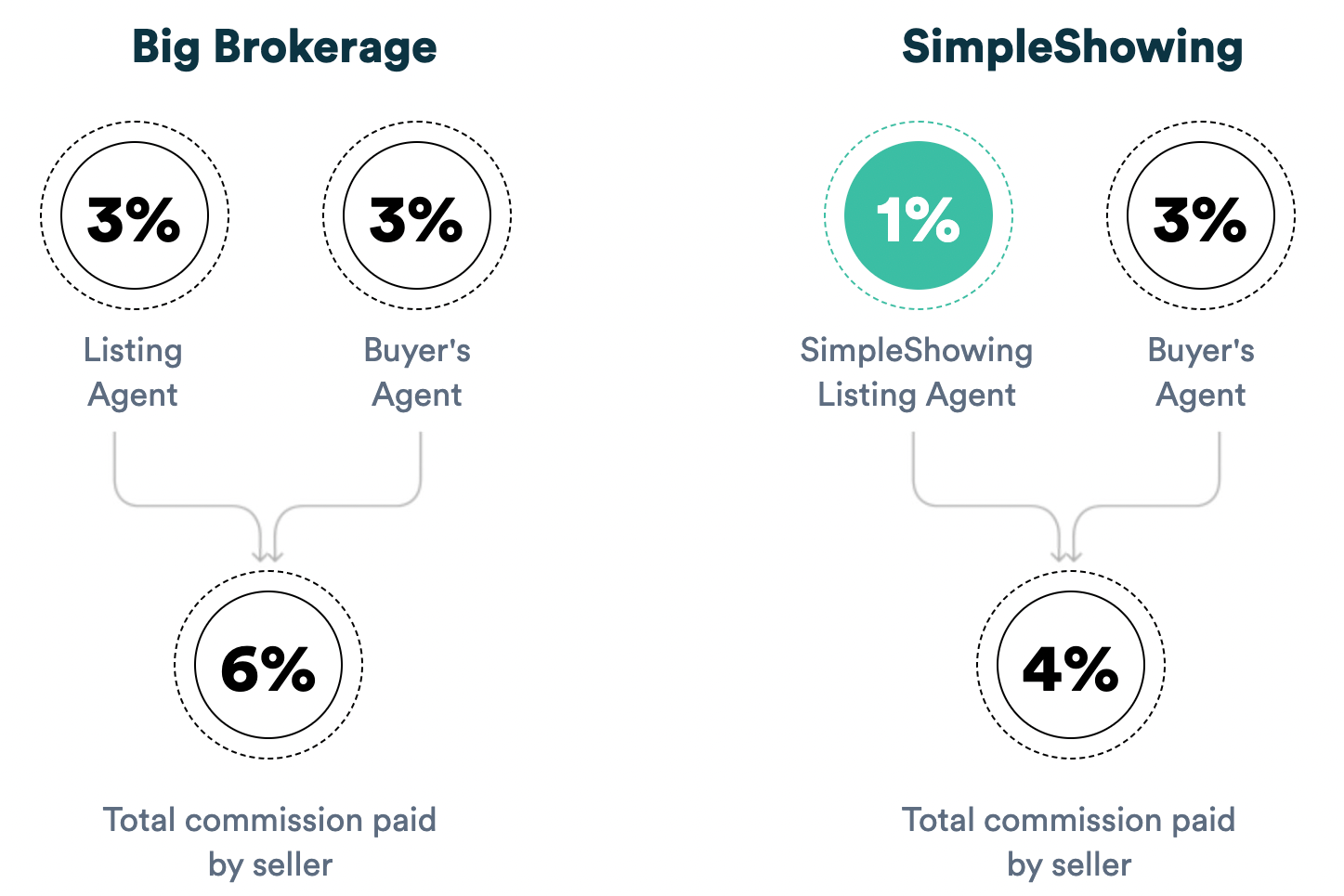
One of the most compelling reasons to consider a reduced listing agent commission is the substantial financial savings it offers. Traditional 3% commissions can add up quickly, especially for higher-value homes. By opting for a 1% commission, sellers can save thousands of dollars, which can be allocated towards new home purchases or other financial goals. In addition to direct cost savings, this model often includes essential services such as professional photography and marketing efforts that ensure your property is presented in the best possible light.

These savings are particularly relevant in competitive markets like Athens, where every dollar counts in maximizing your property’s sale price and minimizing associated costs. Sellers can benefit from high-quality local expert agents who understand the nuances of the Athens market and provide valuable insights to ensure a successful transaction.

Enhanced Accessibility and Convenience

Reduced listing agent commissions also come with the added advantage of greater accessibility and convenience for sellers. Real estate platforms offering these lower rates typically provide user-friendly online tools that streamline the selling process. From scheduling home tours to managing offers and negotiations, these platforms offer a seamless experience that saves time and reduces stress.

This accessibility ensures that even those new to the real estate market can navigate the process with confidence and ease. By leveraging technology and expert support, sellers can enjoy a smooth transaction while benefiting from significant cost savings.

The Future of Real Estate Transactions

The shift towards reduced listing agent commissions represents a broader trend in the real estate industry towards greater transparency and value for consumers. As more property owners recognize the benefits of this model, it is likely to become increasingly prevalent. This evolution reflects a growing demand for cost-effective solutions that do not compromise on service quality or expertise.

By staying informed about these trends and considering alternative brokerage models, you can position yourself to make the most advantageous decisions when selling your property. Embracing reduced listing agent commissions could be a key factor in achieving your financial goals while ensuring a successful real estate transaction.
Real Estate Agents That Offer Commission Refunds & Rebates

If you’re considering buying a house, you’re probably researching things like home prices, mortgages, school districts or closing costs. But, have you considered how a home buyer refund might impact the purchase of your next property?

Whether you’re an investor or a first time buyer, it would be wise to research which real estate agents offer commission refunds in your area. If you’ve already begun working with a Realtor, you should understand how to negotiate a commission refund with your agent.

Agents That Offer Commission Refunds

One of the first brokerages to pioneer the concept of commission rebates was Redfin. The company began offering rebates to clients in the amount of 1% of the final price of the property. Over time, the company phased out the rebate as they became publicly traded and more focused on profitability. Today, Redfin provides a great mobile app and search experience but is no longer offer a commission refund, however they do provide a small credit if you opt to use their in-house mortgage lender.

SimpleShowing.com has filled the gap in terms of commission refunds throughout the Southeast – including states like Georgia, Florida and Texas.

When buying a home, the company provide up to a 1.5% commission refund on new construction properties and 1% on resale homes. On average, SimpleShowing gives buyers about $5,000 and has refunded more than $2M in commissions since 2018.

SimpleShowing Real Estate is a full service brokerage and represents buyers and sellers across multiple markets in the US.

What Commission Percentage Do Real Estate Agents Make?

It’s common knowledge that real estate agents make a commission percentage from the sale or purchase of a home. But rates can be negotiated and vary based on the broker, the price point of the home, the market and other factors.

Keep reading for a detailed explanation of how commission fees work, answers to common commission questions, and various ways sellers and home buyers can save on commission rates and closing costs.

What Commission Do Realtors Make?

While the total amount of commission that agents receive is based on a percentage, the exact percentage varies across markets. Nationally, home sellers can generally expect to pay about 5.75% of a home’s final sales price in total commissions.

In many markets, a total commission of 5.25% or even 5.0% is common, while other markets may see 6% across the board. Whether it’s 5%, 6% or somewhere in between, the final amount is typically split between the listing agent and buyer agent and represents the median commission rate in the US. Each agent then pays a “split” to the sponsoring broker, depending on the compensation structure of the brokerage.

Nationwide, most big, national brokerages charge a total 6% commission rate.

In this structure, the listing agent will keep half of the proceeds (typically between 2.5% and 3%), and then give the other half of the proceeds to the buyer’s agent.

Say you sold your home for $300,000 and worked with a listing agent with a 6% commission fee. After the sale of the home, your listing agent would earn $18,000 back in commissions. That profit would then be split with the buyer’s agent leaving each with $9,000 in profits.

As mentioned, it should be noted that while the national average for commission percentages sits between 5% and 6%, that is not necessarily the case for all agents. Some may charge higher and others lower. Some independent brokerages, such as SimpleShowing, offer sellers a low 1% listing fee. Do your research and shop around to find an agent whose commission model works best for you.

Who Pays the Agents?

Generally, real estate agents are paid by the seller. This money comes out of the proceeds generated from the sale of the home. The full 5-6% commission of the home is combined for simplicity. The listing agent will keep a portion of the profits while the other portion is given to the buyer’s agent.

Generally, the split is 50-50, meaning the listing agent keeps half of the total commission and buyer’s agent keeps the other half. For example, if the total commission is 5%, each agent would receive 2.5% of the final sales price of the home. For a $600,000 property, this would be $15,000 for each agent.

You might be wondering “why would the seller pay the fee for the buyer agent?” While it may initially seem strange that the seller would pay both, it’s important to note that it’s a bit more nuanced than it sounds. The buyer agent’s commission fee is factored into the listed price of the home.

In other words, if there was no buyer agent involved, it’s feasible that the home seller might sell the home for 2-3% less than the asking price, since they wouldn’t have to compensate a buyer agent.

If you sell your home for $500,000 and pay a total of 6% in commission, you will actually only actually receive $470,000 back after you pay the agent commissions (excluding other possible closing costs).

Do Realtors Keep the Full Commission?

As much as agents would love to receive their full portion of their sale, commission fees don’t usually work that way. Agents rarely work independently, but instead through a brokerage. A brokerage refers to the company they represent and whose branding is on their advertising material. Brokerages provide support for the agent and pays for expenses associated with real estate transactions.

In return for all that they provide, agents are required to give a certain percentage of their commissions back to the brokers. This percentage is often 5%-20% of the commission received for large, national brands like Keller Williams and ReMax. This percentage could vary depending on how long the agent has been working with the brokerage or if the agent has “capped” out by paying the broker a predefined amount. On the other hand, there are brokerages where the agent gets to keep 100% of your commission and own your brand.

Can You Negotiate Realtor Commissions?

While Realtors certainly deserve compensation for the work they do, keep in mind that most of the time you can negotiate the commission rate with your agent or find ways to lower or offset the commission fees.

In some situations, sellers may be able to negotiate commission percentages. This includes when home sellers using the same agent to sell their current home and then again buy a new one – similar to a loyalty discount.

Some agents also give discounted rates to repeat clients and investors that buy/sell multiple properties.

Another scenario that represents an opportunity to save on commission is when there is only one agent involved during a home sale. For example, if you are selling your home and the buyer does not bring an agent into the transaction, only one agent is involved. This represents an opportunity to potentially save up to 3% (or half the total commission).

Lastly, many buyer agents will kick back a portion of the commission to the home buyer their clients in the form of a consumer rebate – which is surprisingly encouraged by the United States DOJ. In this scenario, savvy home buyers could get rewarded with a commission refund for performing showings on their own or leveraging the agent on a limited basis.

Try Independent Brokers like SimpleShowing

If you simply want to save money on the sale or purchase of your home, a low commission real estate agent might be your best bet.

With SimpleShowing, sellers save thousands with a 1% listing fee that automatically lowers total commission to just 4% instead of 6%. Not only that, but you will get the same exceptional service and features of a mega brokerage.

If you’re looking to buy a home, you are in luck too. With the SimpleShowing Buyer Refund, home buyers can also receive a portion of their agents commission at closing. Whether you are buying or selling, just imagine what you could do with that extra cash in your pocket. Contact SimpleShowing today to connect with a local agent.

Final Thoughts

Understanding the agent’s commission is crucial for both the seller and potential buyers engaging in real estate transactions. Real estate agent commissions, guided by standards set by the National Association of Realtors, play a pivotal role in agent-assisted home sales. Experienced agents involved in these transactions typically share the commission, which is a percentage of the home’s final sale price. This commission is not just a fee but a reflection of the value and expertise that real estate professionals bring to the table.

It’s essential to recognize that the final sale price of a home is influenced by the efforts of these professionals, ensuring that all parties involved, including both the seller and potential buyers, receive fair and expert representation. The dynamics of real estate commission underline the importance of understanding the nuances of these fees. When a home sells, the selling agent and the buyer’s agent, both integral to the transaction, share the commission.

This cost, while seemingly an additional expense, is justified by the comprehensive services and market knowledge provided by these agents. The real estate market thrives on the expertise of these professionals, ensuring that the complexities of buying or selling a home are navigated with skill and proficiency. Remember, the agents involved are not just facilitators but key players in achieving successful real estate deals, making their commission a worthy investment for a successful outcome.

Do Buyers Pay Realtor Fees?

Imagine that you’re shopping for a home and your agent has shown you 50 houses over the course of 6 months. Home inventory in your area is tight and each time you find a promising house, you get outbid by another homebuyer.

This scenario is all too common – your agent has done a ton of work, yet they haven’t actually made any commission (yet)!

Do Homebuyers Pay Realtor Fees?

The short answer is yes. But the process and explanation is somewhat complicated.

Let’s review a few concepts that will reveal how the buyer’s agent gets paid.

First – you (the buyer) do not write a check to your agent at closing. Nor do you wire them money. In fact, the buyer agent commission isn’t even captured in your “cash to close” amount that’s payable at closing.

But, if the buyer truly pays the agent commission, how exactly does it get paid?

This is the important question to ask: “Who pays for the buyer agent commission and how does it work”?

Buyer Agent Commission: How it Works

Step 1: You “hire” a buyer’s agent with no up-front cost. This is often a friend, referral or someone you found online.

Step 2: The buyer agent helps you find homes in your price point and arranges home tours on your behalf.

Step 3: The seller bakes in the cost of all commissions when deciding the listing price. In other words, the seller calculates their final net proceeds after all closing costs.

Step 4: Listing agent and home seller agree upon a predefined “cooperating” buyer agent commission amount that will be paid to the buyer agent at closing.

Buyers Pay Commission Indirectly

If you’re a homebuyer, your Realtor and the seller’s Realtor split the total commission fee – typically 5-6% of the purchase price of the home. In other words, your agent usually receives around 3% and the listing agent usually receives around 3% as well.

These fees are technically paid by the seller at the time of closing, but these costs are factored into how much sellers list their home for.

Since these fees get baked into a home’s listing price and you’re the only one who pays money at closing, the buyer’s agent commission gets passed onto you when you buy a home. In other words, it comes from your mortgage/loan on the home.

Said another way, you could theoretically buy a house for 6% less than the market price if no Realtors were involved in the transaction. Or, you could save 3% if you did not hire a buyer agent. In fact, this happens all the time with off-market deals, investor-owned properties and “for sale by owner” transactions.

Conclusion

In today’s market, it’s most convenient to hire a Realtor – especially if you’re a first-time home buyer. However, it’s important to understand that agent commissions are negotiable when buying or selling a home. As a buyer, you can negotiate a commission refund and as a seller, you can negotiate a reduced listing fee.

Negotiating Real Estate Agent Commission: How to Reduce Costs

When buying or selling a home, you are likely to come across many costs. If you are working with a realtor, you will want to factor commission fees into your costs. Most often, the realtor commission is 6% of a property’s final sale price. The buying and selling agents then split that commission between them, with each taking 3%.

A common misconception when it comes to real estate agent commission is that the 6% is standard within the industry. In truth, there is no common price. That 6% simply serves as an average standard. What many real estate agents and brokers won’t tell you is that the commission is almost always negotiable.

However, your ability to negotiate a lower percentage depends on several factors. Just be aware that if you do offer a lower commission rate to your realtor, they may refuse your offer or potentially back out as your agent.

Luckily, there are a few reasons a realtor might be willing to accept lower commission fees. Check out these reasons for negotiating real estate agents commission, as well as how to effectively negotiate fees to reduce costs.

Reasons a Realtor Might Accept Lower Commission

Negotiating commission with your real estate agent may be a bit tricky as most like to stay as close to the average rates as possible. But, if you are lucky and good at negotiating, you may be able to find a compromise. Here are a few instances in which an agent might accept your counteroffer.

  • If it is a buyers market and the home is an easy one for the agent to sell.
  • If you are selling a move-in ready home that is already staged, or it is a buyers market and your home is an easy sale. This is less work on the agent’s end.
  • If your home is high-end with an equally as high listing price. Agents will often overlook lower rates when they are already making good money from larger sales.
  • If you are using the same agent to buy and sell simultaneously or are using the agent to sell multiple properties. This is often known as “dual agency”.
  • If you work in the industry (ie. investor) and find yourself frequently buying and selling, many agents give you a break because of repeat business.
  • If you as the buyer/seller are taking care of many of the tasks the agent would typically do. Doesn’t really make sense to pay full commission if the agent is only doing half the work?

How to Negotiate Lower Real Estate Commission

Before negotiating with your real estate agent, you will want to know the ins and outs of doing so effectively. The more knowledgeable you are, the more leverage you’ll have in negotiating. At the end of the day, you will want to be respectful to your agent and make a counteroffer that is beneficial to both parties.

Know the Local Market Well

Knowing your local market is a great negotiation tool to use to your advantage. If you are a seller living in a hot neighborhood, provide that reasoning to your real estate agent as to why your home would be an easy (and profitable) sale for them. Of course, you will also want to do your research and back up this claim with data that shows just how quickly similar homes in your area are selling, as well as their selling prices.

Be sure you also know the average agent commission rate in your area. This will serve as a solid baseline for your negotiations to ensure both parties are keeping requests reasonable. While the rate typically averages at 6%, this could differ depending on the location.

Offer to Take on Some of The Responsibility

The real estate agent commission that you pay is to compensate your agent for the services they provide. However, if you eliminate some of the services that the agent would traditionally provide and instead do them yourself, then you may get a discount on their fees.

As a seller, you could take your own listing photos or stage your own home. As a buyer, you can do the home search yourself and have your agent for negotiation and contract support. Just make sure you are capable of taking on these responsibilities. There’s a reason agents are paid for their service.

You are Buying Multiple Properties

If you are an investor who is buying and selling multiple properties frequently, let your real estate agent know you’d like them to help with the transactions. If you are a good client and continue to do business with them, you may be able to talk them into adjusting their rates.

Sell in the Off Season if Possible

Business slows for real estate agents in the fall and summer months. Sellers are holding tight onto their homes and buyers are waiting out for the spring housing market to hit.

While selling during this time might mean you will face a longer selling period, you may be able to use this to negotiate a lower commission price. If an agent is in serious need of business, they may be willing to work out a deal with you.

The Smartest Way to Lower Commission

While negotiating real estate agent commission is certainly possible, it is not always guaranteed. However, what if we told you there was a smart and easy way to save on hefty real estate agent commission rates with no negotiation involved?

Low-commission or discount brokerages like SimpleShowing charge lower commission rates than a traditional brokerages while providing very similar (if not the same) level of service compared to a larger, “full-service” brokerage.

For sellers, SimpleShowing charges $0 up front and a 1% listing fee at closing. This 1% listing fee includes:

  • Listing on the MLS and 50+ real estate sites
  • An open house
  • Professional photos
  • Digital marketing of your listing
  • Dedicated real estate agent
  • Contract and negotiation support

For buyers, SimpleShowing rewards a commission refund of up to 50% at closing (half of the typical 3% commission, or 1.5% of the purchase price). This refund will be written as a check to the buyer at closing or used to reduce the buyer’s closing costs. Buyer services include:

  • No fees or obligations
  • Dedicated real estate agent
  • Instant online, tour scheduling of any home
  • Help with inspections and repairs
  • Contract and negotiation support

Ready to save on real estate agent commission without compromising on the full-service experience. Contact us today to get in touch with an agent.

Final Thoughts

Understanding the nuances of a real estate agent’s commission can significantly influence both the buyer and seller’s experience. Clever real estate strategies and keen awareness can guide a homeowner in the home selling process, ensuring they strike a balance between getting a fair price and availing the expertise of local agents. As the article highlights, it’s entirely feasible to negotiate real estate commission, especially when you’re equipped with knowledge about competitive buyer’s agent fees, dual agency dynamics, and the specifics of a listing agreement.

In essence, while real estate agent commissions may appear set in stone, they’re anything but. It’s imperative for participants in the home buying or selling process to arm themselves with the right tools and insights. Doing so not only ensures a fair deal but also paves the way for a more harmonious relationship between all parties involved. Remember, as with any business transaction, negotiation is key, and understanding the intricacies of the real estate realm is the first step towards a successful deal.